What is a URL shortener and how does it work?
How short links work under the hood, what they track, and how to run one on your own domain instead of a generic shortener's.
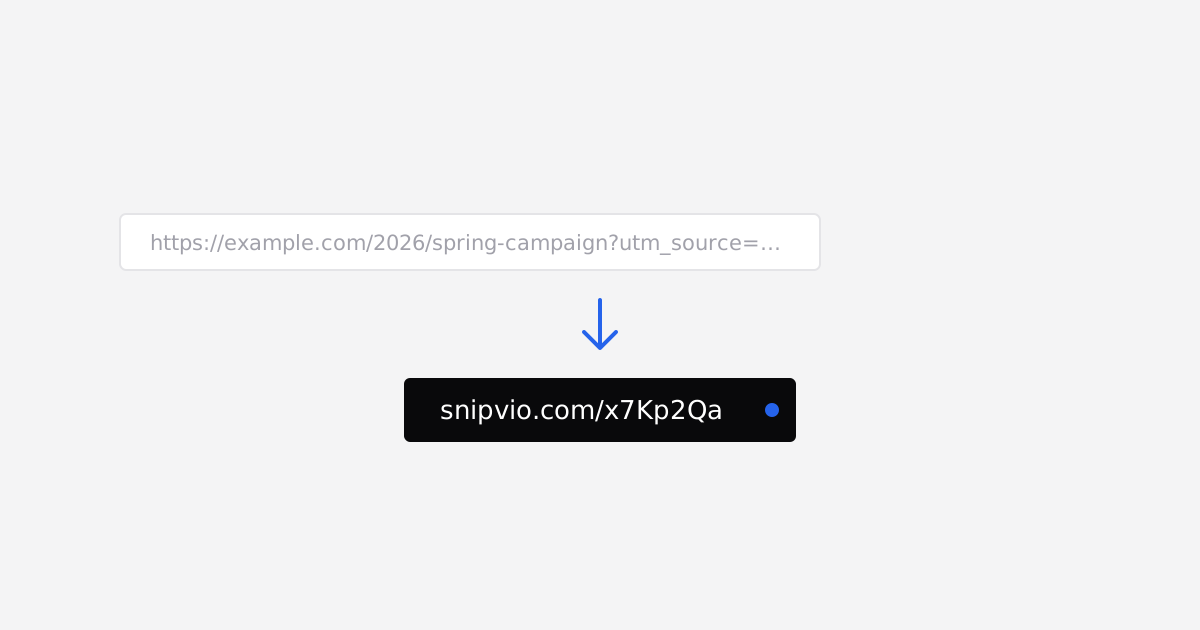
A URL shortener takes a long web address and gives you a short one that forwards to it. example.com/products/summer-sale-2026?utm_source=instagram&utm_campaign=launch becomes something like snipvio.com/x7Kp2Qa.
That is the visible part. What makes shorteners genuinely useful is what happens in between.
How a short link works
When you create a short link, the service stores two things: a short code, and the destination you want it to point at.
When someone opens the link, four things happen in a few milliseconds:
- The service looks up the code in its database
- It records details about the visit: rough location, device type, and referring site
- It sends back an HTTP redirect, usually a
302 - The browser follows that redirect to the real destination
The visitor typically notices nothing. Well-built shorteners write their analytics after sending the redirect, so logging never slows anyone down.
301 versus 302, and why it matters
A 301 is a permanent redirect and browsers cache it aggressively. A 302 is temporary and gets re-checked each time.
Most good shorteners use 302 deliberately. If a browser caches a 301, you can never change where that link points, and you stop seeing clicks from anyone whose browser cached it. The temporary redirect keeps links editable and analytics accurate.
What short links can track
Because every click passes through the service, a shortener can record:
- Time of each click
- Country, derived from network-level geography
- Device type, from the browser's user agent
- Referrer, the site the person came from, when the platform provides it
What it cannot see is anything that happens after the redirect. A shortener knows someone clicked; it has no idea whether they bought anything. For that you need analytics on the destination site itself.
The bot problem nobody mentions
Here is something most shortener dashboards quietly get wrong.
When you paste a link into Slack, Discord, X, WhatsApp, or LinkedIn, that platform immediately fetches your link to build a preview card. Search engines crawl it. Uptime monitors ping it.
Every one of those looks like a click. Share a link in a busy Slack workspace and you can see a dozen clicks before a single human has seen it.
If your shortener does not separate humans from bots, your numbers are inflated by an unpredictable amount, and you end up making decisions on fiction. Snipvio classifies every request and reports human clicks, QR scans, and bot traffic as separate figures.
Good reasons to use one
- Character limits. SMS and some social platforms charge you real estate for long URLs.
- Print and QR codes. Nobody types a 120-character URL off a poster.
- Editable destinations. Change where a link points after it has been printed or emailed.
- Attribution. See which channel actually drove traffic, rather than guessing.
- Branding. A link on your own domain gets more clicks than a generic one.
When not to use one
- Inside your own site. Use ordinary internal links. Short links add a hop and can affect crawling.
- Where trust is fragile. Short links hide their destination, and cautious audiences may not click. Branded domains help significantly.
- For anything that must outlive the service. Every short link depends on that company continuing to exist and renew its domain. Several shorteners have shut down and broken millions of links. Ask whether a service promises links never expire, and whether that promise survives cancellation.
Using your own domain instead
Everything above describes a shortener on its domain. The more useful version runs on yours.
Instead of snipvio.com/x7Kp2Qa, your links read go.yourbrand.com/x7Kp2Qa. The mechanics are identical — the same redirect, the same analytics — but the hostname is one your audience already recognises.
That difference matters most exactly where short links are weakest. A generic short link hides where it goes, so a cautious reader has no reason to trust it. A link on your own domain answers that question before anyone taps.
It is also the one part of a shortener you own outright. The short codes live in someone's database, but the domain is yours: if you ever move, you repoint the DNS and the links keep resolving.
How it works
You create a subdomain — go.yourbrand.com, link.yourbrand.com — and point a single CNAME record at your shortener. Not your root domain, which is where your website lives.
One record, at whichever provider answers DNS for your domain:
| Type | Name | Value |
|---|---|---|
| CNAME | go |
snipvio.com |
That last part trips up most people. If your nameservers point at Cloudflare, the record has to be added in Cloudflare — adding it at your registrar instead looks completely correct and does nothing, because nobody is asking that server any more.
We have a walkthrough for each of the common panels: Cloudflare, GoDaddy, and Namecheap. The custom domains guide covers verification and what happens to links you have already shared.
What to look for
- Do links expire, or die when you stop paying?
- Are bots filtered out of your analytics?
- Can you edit destinations after sharing?
- Can you use your own domain, and on which plan?
- What does the free plan actually allow?
That fourth one is worth checking carefully. Most shorteners put custom domains behind their highest tier, which is a reasonable place to draw the line — but it is also the feature that determines whether the links you spend a year building point at your brand or at someone else's.
Snipvio is free for 50 links a month with unlimited clicks, QR codes on every link, bot filtering, and links that never expire, including if you cancel a paid plan. Custom domains are included on Pro and Business.
Frequently asked questions
What is a URL shortener?
A URL shortener is a service that takes a long web address and issues a short one that redirects to it. When someone opens the short link, the shortener looks up the original address and sends the browser there, usually in well under a second. Along the way it can record that the click happened, which is why shorteners double as analytics tools.
Do short links expire?
That depends entirely on the provider, and it is the most important thing to check. Many shorteners disable your links when you stop paying, which breaks every poster, email and printed QR code that used them. Snipvio links never expire on any plan, including after a paid plan is cancelled. Hitting the free plan's monthly limit stops you creating new links, but every link you already made keeps working.
Can I use my own domain for short links?
Yes. You create a subdomain such as go.yourbrand.com and point a CNAME record at your shortener, which then serves your links from your brand instead of a generic one. On Snipvio this is included on the Pro and Business plans, with one domain on Pro and five on Business. Use a subdomain rather than your root domain, because the root is where your website lives.
Are URL shorteners bad for SEO?
Not in the way people usually mean. A short link that issues a proper redirect passes authority to the destination, so links shared externally are fine. The genuine mistake is using short links for navigation inside your own site, where they add an unnecessary hop and give crawlers an extra step for no benefit. Use ordinary internal links there.
Why do my click counts look too high?
Because a large share of automated traffic never identifies itself as a human visitor. Link previews, security scanners, chat apps fetching a title card and crawlers all open your link, and a shortener that counts raw requests reports every one of them as a click. Snipvio separates bot traffic from human clicks and excludes bots from the charts, which is why its numbers are often lower, and more accurate, than other tools.
Is a URL shortener free?
Most offer a free tier with a cap on how many links you can create. Snipvio's free plan allows 50 new links a month with unlimited clicks on them, QR codes on every link, bot filtering, and no credit card. Paid plans start at $6.99 a month and add unlimited links, custom domains and other features.
Start shortening for free
50 links a month, QR codes, and links that never expire.
Create your free accountKeep reading
How to get a short link with your own domain
Turn go.yourbrand.com into your own short link domain. One CNAME record, about 10 minutes, no coding. Step-by-step setup for Cloudflare, GoDaddy and more.
Why your link click numbers are probably wrong
Bots inflate link analytics more than most people realise. Here is what is happening and how to read your data honestly.