Why your link click numbers are probably wrong
Bots inflate link analytics more than most people realise. Here is what is happening and how to read your data honestly.
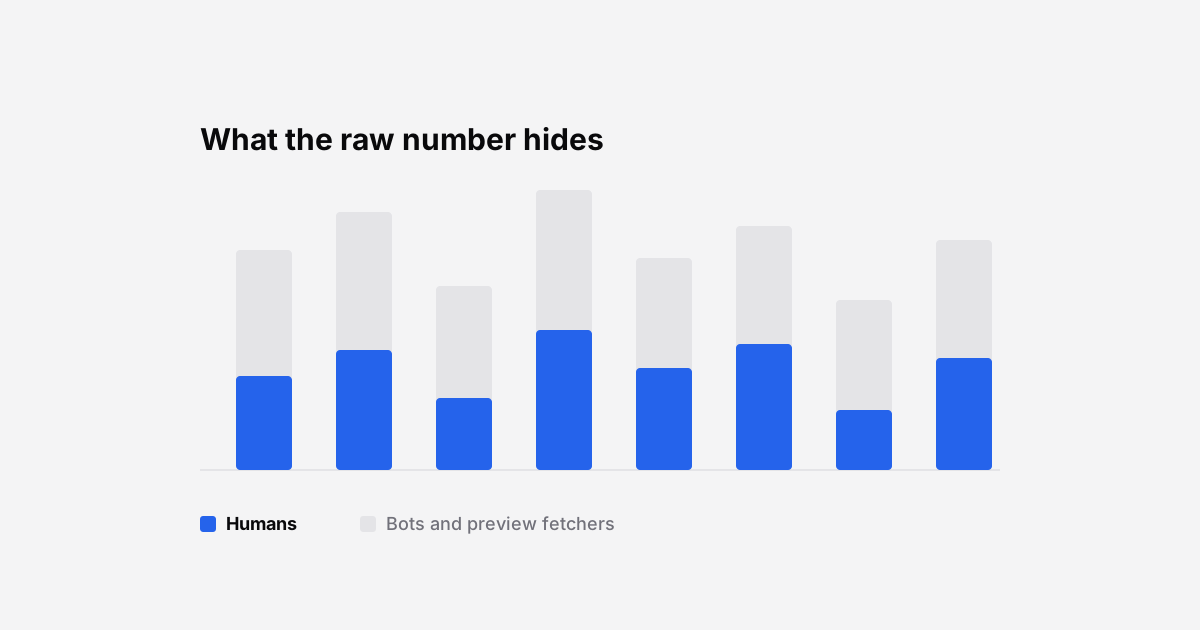
You share a link in a company Slack channel. Within seconds your dashboard shows fifteen clicks. Nobody has read anything.
This happens constantly, and most link analytics never mention it.
What is actually clicking
Every time a URL appears somewhere, automated systems fetch it:
- Preview cards. Slack, Discord, X, WhatsApp, LinkedIn, Telegram, and iMessage all fetch a link immediately to build that little card with a title and image.
- Search crawlers. Googlebot and friends follow links they discover.
- Security scanners. Corporate email gateways open links to check them for malware, sometimes every recipient's copy.
- Uptime monitors and scripts. Anything checking the link is alive.
- AI crawlers, which have grown quickly in the last couple of years.
To a naive shortener these all look identical to a person tapping a link.
Why it distorts decisions
The problem is not that the number is too high. It is that inflation is uneven.
A link shared in one busy Slack workspace might collect twenty bot fetches. The same link posted to a quiet channel collects two. Compare those two campaigns and you conclude the first performed ten times better, when the human numbers might be identical.
Email is worse. Security gateways at large companies can open every link in every message, so a newsletter to enterprise subscribers can show click rates far above reality.
How filtering works
Bots identify themselves in the user agent string, the short description a client sends with each request. Known crawlers, preview fetchers, monitors, and scripting libraries all announce themselves recognisably. Requests with no user agent at all are also suspect.
That is not perfect, since a determined bot can lie. But it catches the overwhelming majority of automated traffic, which is honest and not trying to hide.
Snipvio classifies every request this way and reports human clicks, QR scans, and bot traffic as three separate numbers. Charts and breakdowns use humans only.
Reading the rest of your data
Referrers are incomplete. Many apps strip referrer information. A large "Direct" share is normal and does not mean the data is broken.
Countries are approximate. Location comes from network-level geography, which VPNs and corporate networks distort.
Numbers will not match your website analytics. A click is someone leaving for your site; a session is someone arriving. People abandon in between, and the two tools measure different moments. Neither is wrong.
Practical advice
- Compare like with like. One channel against itself over time beats one channel against another.
- Watch trends, not absolutes. Direction is more reliable than any single figure.
- Be suspicious of instant clicks. A burst in the first seconds after posting is usually preview fetches.
- Ask your tool whether it filters bots. If it does not, treat every number as an unknown overestimate.
The goal is not perfect data, which does not exist. It is data honest enough that decisions made on it are not accidental.
Snipvio filters bots on every plan, including free.
Frequently asked questions
Why are my link clicks higher than my website visits?
Because a large share of link opens are not people. Link previews in chat apps, security scanners, SEO crawlers and social platforms all fetch your short link to build a preview card, and each fetch looks like a click to a tool that counts raw requests. Those visitors never load your site, so your analytics platform never sees them, and the two numbers diverge.
How does bot filtering work?
Snipvio inspects each request and classifies it as human or automated before recording it. Bot hits are stored but excluded from your charts, so the dashboard shows the figure you actually care about, with a separate count of what was filtered. Keeping the excluded total visible matters, because a filter you cannot audit is just a smaller number you have to trust.
Can bot traffic be blocked entirely?
No, and any tool claiming otherwise is overstating it. Detection relies on signals that can be imitated, so some automated traffic will always pass as human and some unusual real visitors will be filtered out. The realistic goal is removing the obvious, high-volume automated traffic that otherwise doubles your numbers, not perfect separation.
Do QR code scans count as clicks?
They are counted separately on Snipvio. A scan and a click are different actions with different intent, and mixing them hides which channel is working. The dashboard reports human clicks and QR scans as distinct figures.
Start shortening for free
50 links a month, QR codes, and links that never expire.
Create your free accountKeep reading
How to get a short link with your own domain
Turn go.yourbrand.com into your own short link domain. One CNAME record, about 10 minutes, no coding. Step-by-step setup for Cloudflare, GoDaddy and more.
Why branded short links get more clicks
What a custom domain changes about trust and click-through, and how to set one up in a few minutes.